
Projects & Artifacts
Throughout my journey from a 25+ year career working in the HVAC/R industry to becoming a Construction Technology educator in the Ontario secondary school system I have had the opportunity to build new skills, grow as an educator, and work with exceptional students and colleagues. A selection of these experiences are showcased below.

Service Learning Project:
Maintaining -80 Freezers
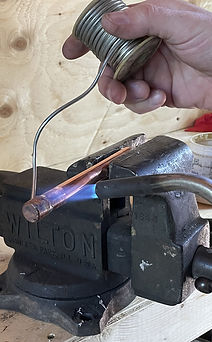
I designed and delivered two workshops on preventative maintenance for -80°C freezers to graduate students, lab technicians, and research lab managers at the Schulich School of Medicine & Dentistry.
These freezers store irreplaceable research materials, such as human tissue and biological samples, which are needed for grant-funded biomedical research. A freezer failure could cause devastating sample loss for research teams.
This project addressed a critical community need while giving me the chance to apply my technical expertise and practice my teaching and facilitation skills.

St. Thomas Rams Robotics Club
During my practicum placement, I volunteered with the St. Thomas Rams High School Robotics Club to broaden my experience mentoring students beyond the traditional classroom environment.
This opportunity allowed me to work closely with students in a hands-on, collaborative setting where problem-solving, creativity, and teamwork were central to learning. I supported students as they designed, built, tested, and refined their robotics projects, encouraging persistence, safe tool use, and effective communication. Through regular after-school sessions, I developed strong rapport with team members and gained valuable insight into how students learn through experiential, project-based activities.
This experience strengthened my confidence in mentoring students in informal learning environments and reinforced the importance of co-curricular programs in fostering student engagement and growth.

Making Muskoka Chairs with TCJ40 students
In my TCG40 Construction Technology class, Grade 12 students complete a hands-on project to build a Muskoka Chair. This project integrates design, planning, and skilled craftsmanship. Students begin by interpreting templates and laying out accurate plans before selecting from multiple chair styles, such as freestanding or rocking designs. The project emphasizes essential construction skills including measuring, marking, cutting, drilling, fastening, sanding, and assembly. Students also apply problem-solving and precision as they adjust components for fit and structural stability. Creative choice is built into the process through optional design elements such as engraved details and customized paint or stain finishes. This project develops technical competence, attention to detail, safety awareness, and pride in producing a functional, high-quality finished product.

Charcuterie board with TAS10 students
In my TAS10 Construction Technology class, students complete a hands-on woodworking project to design and build a custom charcuterie board using live edge walnut. This project integrates creativity, design thinking, and skilled craftsmanship. Students begin by selecting a unique piece of wood and developing a board layout and handle shape that responds to the natural live edge of the material. They then design a custom graphic or text file to be engraved on their board using a CNC machine. Throughout the build process, students develop essential woodworking skills including planing, cutting on the band saw, drilling, routing, and progressive sanding using a variety of sanding tools. Students apply problem-solving and precision as they refine shapes, smooth surfaces, and adjust designs based on the characteristics of their wood. Creative choice is embedded throughout the project through individualized board shapes, handle designs, and engraved details. This project builds technical skill, design awareness, safe tool use, and pride in producing a functional, high-quality finished product.

Learning about basic circuits and electricity with TCJ20 students
In my TCJ10 Construction Technology class, students completed a hands-on electrical project to design and build a DC electrical board using both series and parallel circuits. This project integrated electrical theory, problem-solving, and practical skill development. Students began by planning their circuit layout and determining how components would be connected to safely power a DC motor. Throughout the build process, students learned to identify and work with motor windings, including determining the winding, removing insulation, stripping wire, and preparing connections. They developed hands-on skills using a soldering iron, including twisted-wire soldering techniques, while installing switches, motors, terminals, and wiring connections. Students also learned proper wire routing and organization to ensure safe and reliable circuits. Many students chose to use their completed board to power a small fan, giving them a clear and exciting demonstration of success when their circuit functioned as intended. This project builds foundational electrical skills, reinforces safe tool use, and fosters confidence and pride. Several students expressed excitement about their accomplishment in the weeks after completing the project. Of everything that students made in this class it is the only project that had a kinetic element, which was very engaging for students.

Introduction to woodworking skills with TAS10 students
In my TAS10 Construction Technology class, students complete an introductory woodworking project by designing and building a wooden crucifix. This project integrates foundational woodworking skills, thoughtful craftsmanship, and respect for material and purpose. Students begin by selecting appropriate wood and considering grain, size, and workability before measuring and marking accurate dimensions for their design. Throughout the process, students learn how to work safely in the shop and are introduced to basic hand and power tools, including tools for cutting, drilling, sanding, and assembly. Emphasis is placed on proper tool handling, clean joints, and careful surface preparation. Students also develop problem-solving skills as they adjust components for fit, alignment, and symmetry. Designed as a confidence-building experience, this project helps students develop essential skills and comfort in the shop before progressing to more complex woodworking projects, while fostering pride in producing a meaningful, well-crafted finished piece.